Pak Imtehan
Competitive Exams Prep App (CSS. PMS)
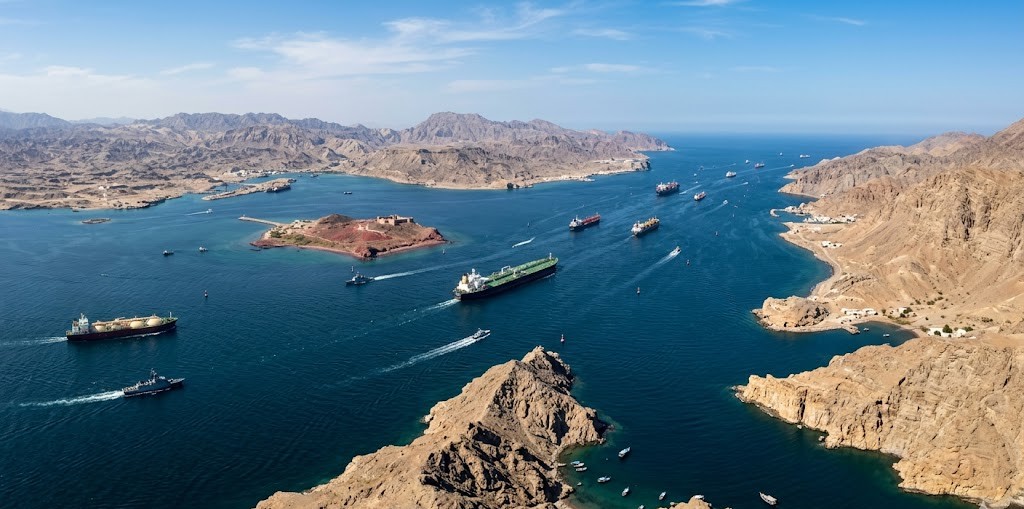
The sudden seizure of a commercial tanker or the targeted deployment of naval mines in the narrow corridor of the Strait of Hormuz represents the single greatest external threat to Pakistan’s internal stability. As a state that relies on Middle Eastern imports for over 70% of its oil and a vast majority of its Liquified Natural Gas (LNG), Pakistan’s economic heartbeat is synchronized with the pulse of this maritime artery. Any disruption here does not just raise fuel prices; it threatens the basic functionality of the national power grid and industrial productivity. This vulnerability is not merely a logistical concern but a profound geopolitical constraint that dictates Pakistan’s regional alignment and domestic policy choices.
The Geography of Vulnerability: Pakistan’s Proximity to the Chokepoint
The Strait of Hormuz is a unique maritime bottleneck where the shipping lanes pass through a passage only 21 miles wide at its narrowest point. For Pakistan, this geography is a double-edged sword. While its proximity to the Persian Gulf allows for lower freight costs compared to East Asian importers, it places Pakistan’s entire energy supply chain within a zone of immediate regional volatility. The short transit distance from terminals in Ras Tanura or Jebel Ali to Karachi means that Pakistan has almost no lead time to react to a sudden maritime closure. Unlike larger economies with massive strategic petroleum reserves (SPR), Pakistan operates on a thin margin of stocks, often hovering around 20 days of supply.
This geographical reality links Pakistan’s energy security directly to the friction between Iran and the United States, as well as the regional rivalry between Tehran and Riyadh. If the Strait is obstructed, the alternative routes for Gulf energy, such as pipelines across Saudi Arabia to the Red Sea, primarily serve Western markets or specific partners, leaving Pakistan’s primary supply route severed with no immediate bypass. The proximity of the Pakistani coastline to the mouth of the Gulf ensures that any localized conflict spills over into the country’s territorial waters and economic exclusion zone.
The LNG Dependency and the Rigidity of the Supply Chain
While oil has traditionally been the focus of energy security, Pakistan’s pivot toward natural gas for power generation has introduced a new, more rigid layer of risk. Unlike the global oil market, which features a robust spot market and flexible shipping, the LNG supply chain is defined by specialized infrastructure and long-term contracts. A closure of the Strait of Hormuz would effectively freeze Pakistan’s power sector because LNG carriers cannot be easily rerouted or replaced by overland supplies. As the economist Vaclav Smil noted in his assessment of global systems, “the scale of our dependence on fossil carbon for every aspect of modern life remains the most ignored fact of our existence,” a reality that becomes painfully visible when the physical transit of that carbon is threatened.
The transition to gas-fired power plants was intended to provide a cleaner, more efficient energy mix, but it has inadvertently concentrated risk. Because Pakistan lacks significant regasification capacity outside of its main ports, and because those ports are fed almost exclusively by vessels passing through Hormuz, the country’s industrial output is tethered to the stability of the Omani and Persian coasts. A maritime blockade or a significant spike in insurance premiums for Gulf transit would render Pakistani exports uncompetitive globally due to soaring input costs.
The Financial Burden of Maritime Volatility
Energy security is as much a fiscal issue as it is a logistical one. For Pakistan, the Strait of Hormuz acts as a price multiplier. Even in the absence of a physical blockade, the mere threat of instability in the Strait triggers a surge in War Risk Surcharges (WRS) by global shipping insurers. For a country struggling with chronic balance-of-payments issues, these incremental increases in shipping costs can deplete foreign exchange reserves faster than planned budgetary adjustments.
The economic impact is non-linear. A 10% increase in global oil prices due to Hormuz tensions does not result in a simple 10% increase in domestic costs; it causes a cascade of inflationary pressures, currency devaluation, and increased sovereign debt. The Strait of Hormuz functions as a geopolitical regulator of Pakistan's GDP growth. When the corridor is clear, the economy has a chance to breathe; when it is contested, the fiscal space for development projects evaporates. This financial sensitivity forces Islamabad to maintain a delicate, often precarious, diplomatic balance with all Gulf actors, prioritizing maritime stability over almost all other foreign policy objectives.
Naval Limitations and the Protection of Sea Lines of Communication
Pakistan’s ability to influence the security of its Sea Lines of Communication (SLOCs) is limited by the size and reach of its naval assets. While the Pakistan Navy is a professional force, its primary orientation has historically been defensive and focused on the threat from the east. Securing the path to the Strait of Hormuz requires a blue-water capability and a level of maritime domain awareness that is currently dependent on international task forces. The reliance on Combined Task Force (CTF) 150 and 151 for anti-piracy and maritime security highlights a gap in sovereign control over energy transit.
The increasing presence of non-state actors and the use of grey zone tactics, such as limpet mines or drone attacks on tankers, present a challenge that traditional naval platforms struggle to counter. Pakistan’s energy security is now at the mercy of asymmetric warfare tactics that can disrupt shipping at a fraction of the cost of traditional naval engagement. This shift means that the safety of the Strait is no longer guaranteed by the presence of large carrier strike groups, but is subject to the unpredictable actions of proxy groups and localized maritime sabotage.
The CPEC Alternative: Reality vs. Strategic Rhetoric
The China-Pakistan Economic Corridor (CPEC) is frequently cited as a solution to the Hormuz dilemma, with the Port of Gwadar positioned as a potential energy hub. The logic suggests that energy could be offloaded at Gwadar and moved inland via pipelines, bypassing the heart of the Strait. However, this remains a long-term aspiration rather than a current reality. The infrastructure required to transport the volume of oil and gas needed to sustain the Pakistani economy via land is not yet in place, and the cost of such transit is significantly higher than maritime shipping.
Furthermore, Gwadar itself is located at the doorstep of the Strait. While it sits just outside the narrowest point, it is still within the same volatile maritime theater. Relying on Gwadar as a bypass does not solve the problem of regional conflict; it merely moves the offloading point a few hundred miles to the east. True energy security would require a multi-directional supply strategy that includes overland pipelines from Central Asia or Iran, yet these projects, such as the TAPI or the IP pipeline, remain stalled by international sanctions and regional instability. As Robert Kaplan argued in The Revenge of Geography, “the Indian Ocean is the world’s central cockpit of conflict,” and Pakistan finds itself in one of its most contested corners.
The Role of Strategic Petroleum Reserves (SPR)
To mitigate the risks of a Hormuz closure, the development of a robust Strategic Petroleum Reserve is an urgent policy necessity. Currently, Pakistan’s storage capacity is designed for operational needs rather than strategic shocks. Without a minimum of 60 to 90 days of reserve capacity, the state lacks the strategic depth required to withstand even a brief interruption in the Strait. Building this infrastructure is capital-intensive, but the cost of a total energy shutdown far exceeds the investment required for storage tanks and underground salt caverns.
An SPR provides more than just a physical buffer; it provides diplomatic leverage. A state that can survive a three-month energy cutoff is less susceptible to coercion by regional powers or the sudden shocks of maritime accidents. For Pakistan, the absence of an SPR means that every minor skirmish in the Persian Gulf is treated as a national emergency, limiting the government's ability to plan for long-term economic stability. The creation of such a reserve must be decoupled from seasonal commercial requirements and treated as a core component of national defense.
Diversification and the Shift Toward Indigenous Energy
The only permanent solution to the Hormuz vulnerability is a reduction in the import intensity of the national energy mix. This involves a structural shift toward domestic coal, hydroelectric power, and renewables. While this transition is underway, the pace is often slowed by the sunk cost of existing oil and gas infrastructure. Every new thermal power plant that relies on imported fuel is a multi-decadal commitment to the Strait of Hormuz.
Indigenous energy production is often framed as an environmental or fiscal choice, but in the context of the Arabian Sea, it is a prerequisite for sovereign autonomy. A megawatt of electricity produced by a wind turbine in Jhimpir or a hydro dam in Gilgit-Baltistan is a megawatt that does not have to run the gauntlet of the Persian Gulf. The acceleration of the Green Transition in Pakistan should therefore be viewed through the lens of maritime security. Reducing the number of tankers that must pass through the Strait is the most effective way to insulate the economy from the volatility of the Middle East.
The Geopolitical Cost of Constant Vigilance
The persistent threat of a Hormuz disruption forces Pakistan into a reactive foreign policy. It creates a security paradox where the state must remain on good terms with every entity capable of closing the Strait, even when their interests conflict with Pakistan’s broader strategic goals. Energy dependency turns maritime chokepoints into political levers, allowing supplier states and regional hegemons to exert invisible pressure on Islamabad’s decision-making.
This dependency also complicates Pakistan’s relationship with the United States and China. As the US moves toward energy independence and shifts its focus to the Indo-Pacific, its willingness to act as the guarantor of the Gulf may diminish. If the US Navy scales back its presence in the Strait, a security vacuum will emerge that regional powers will rush to fill. Pakistan could find itself caught between a retreating superpower and an assertive regional hegemon, with its energy security hanging in the balance. This transition requires a more proactive maritime diplomacy and perhaps a greater role for Pakistan in regional maritime security frameworks.
Strategic Insight: Beyond the Bottleneck
The Strait of Hormuz will remain the primary gateway for Pakistan’s energy for the foreseeable future, but it must not remain its only one. The survival of the Pakistani state in an era of global volatility depends on its ability to transform from a chokepoint-dependent economy to a multi-modal energy hub. This requires more than just building ports; it requires the political will to finalize overland pipelines, the fiscal discipline to build massive strategic reserves, and the technical urgency to maximize indigenous energy production.
Energy security is not a status to be reached but a vulnerability to be managed. For Pakistan, the Strait of Hormuz is a constant reminder that its domestic stability is tethered to a few miles of seawater. The goal of future policy must be to ensure that if those waters are ever closed, the lights in Karachi, Lahore, and Islamabad stay on. The true measure of Pakistan’s sovereignty in the 21st century will be its ability to decouple its economic destiny from the precarious geography of the Persian Gulf.
Comments (0)
No comments yet. Be the first to comment!