Pak Imtehan App
Competitive Exams Prep App (CSS, PMS)
The current economic landscape in Pakistan is defined by an intensifying friction between the immediate necessity of debt servicing and the long-term requirement for human and physical capital accumulation. As the state navigates a series of stabilization programs, the fiscal space available for developmental projects has contracted to a point where maintenance often supersedes expansion. This tension is not merely an accounting problem but a fundamental strategic crisis; the resources diverted to meet external and internal obligations are the same resources required to upgrade the national productivity frontier. The following analysis examines how the current debt repayment strategy impacts the state’s ability to foster sustainable growth, the structural weaknesses that necessitate this austerity, and the potential outcomes of prioritizing short-term solvency over generational development.
The Crowding Out of Public Investment
The most immediate consequence of a heavy debt-servicing mandate is the systematic erosion of the Public Sector Development Programme (PSDP). When interest payments consume a dominant share of federal revenue, the development budget becomes the primary variable for fiscal adjustment. This creates a cycle where the state reduces spending on infrastructure, education, and healthcare to meet deficit targets, which in turn slows down the economic activity needed to generate future tax revenue.
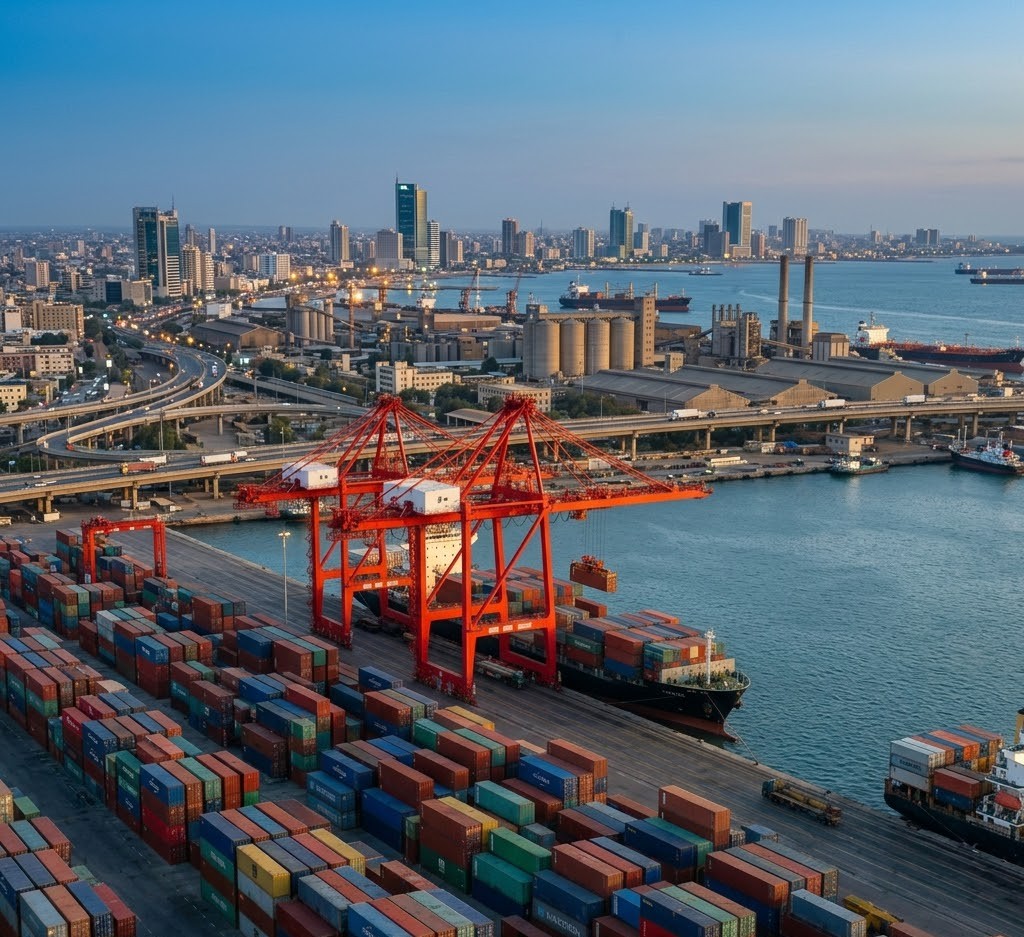
This trade-off is often framed as a temporary necessity, yet the persistent nature of Pakistan's fiscal deficits has made it a permanent feature of the budget. By prioritizing debt obligations over capital expenditure, the state effectively trades future productivity for present-day credibility with international lenders. This shift ensures that while the country avoids default, it remains trapped in a low-growth equilibrium. The physical infrastructure: ports, energy grids, and transport networks depreciates without adequate reinvestment, raising the cost of doing business and further deterring the private investment that fiscal consolidation is supposed to eventually attract.
The Revenue Mobilization Gap and Regressive Taxation
Fiscal consolidation in Pakistan has historically relied on "low-hanging fruit"—primarily indirect taxes and levies on fuel and electricity. This strategy aims to bridge the fiscal gap quickly but places a disproportionate burden on the manufacturing sector and the middle class. A strategy centered on debt repayment requires a predictable cash flow, leading the state to favor consumption-based taxes over more complex reforms in the retail, real estate, or agricultural sectors.
The reliance on indirect taxation to fund debt repayment creates a regressive fiscal environment that stifles domestic demand and increases industrial input costs. As Christine Lagarde, then Managing Director of the IMF, noted, “The world is seeing a growing consensus that while fiscal discipline is essential, the quality of consolidation matters just as much as the quantity,” suggesting that a strategy built on the backs of the most productive sectors eventually undermines the tax base itself. When the state fails to broaden the tax net, the burden on existing taxpayers reaches a breaking point, leading to capital flight and a shift toward the informal economy, both of which reduce the long-term capacity of the state to manage its debt.
Interest Rates and the Domestic Debt Trap
A significant portion of Pakistan’s fiscal consolidation is undermined by the cost of servicing domestic debt. To curb inflation and stabilize the currency, the central bank maintains high policy rates. While this is a standard stabilization tool, it significantly inflates the government's interest bill, as the state is the largest borrower in the domestic market. Consequently, a large portion of tax revenue is cycled back into the banking system as interest payments rather than being deployed for development.
This creates a perverse incentive for domestic banks to favor risk-free government lending over private sector credit. The high-interest environment necessary for stabilization results in a "crowding out" effect where private enterprises cannot afford the capital needed for expansion. The implication is a stagnating private sector that cannot innovate or export its way out of the crisis. The debt repayment strategy thus becomes self-defeating; the high cost of borrowing to pay off old debt ensures that the total debt stock continues to grow even as the government slashes development spending to show a primary surplus.
The Human Capital Deficit as a Long-term Liability
Development is frequently misconstrued as merely "building things," but its most critical component is the development of human capital. Pakistan’s current fiscal path necessitates deep cuts or stagnation in real-term spending on education and vocational training. When debt servicing takes precedence, the "social safety net" is often protected only at a subsistence level, neglecting the transformative investments required to move the labor force up the value chain.
A debt repayment strategy that ignores the human capital deficit ensures that the economy remains reliant on low-value exports and remittances. If the workforce lacks the skills to participate in a modern global economy, the country’s ability to earn foreign exchange will always lag behind its import needs and debt obligations. As Mahbub ul Haq famously argued, “The purpose of development is to create an enabling environment for people to enjoy long, healthy, and creative lives,” a principle that is often sidelined when the immediate focus is the quarterly review of a stabilization program. The long-term cost of this neglect is a demographic "bulge" that becomes a social liability rather than a dividend, as millions enter a job market that lacks the industrial base to absorb them.
The Structural Inflexibility of the Energy Sector
The energy sector represents the intersection of fiscal consolidation and development failure. Circular debt, a byproduct of inefficient subsidies, transmission losses, and low recovery rates has become a massive fiscal drain. The strategy to manage this has primarily involved hiking tariffs to recover costs and satisfy lenders. However, these hikes act as a tax on productivity, making Pakistani exports uncompetitive in the global market.
Raising energy prices to close fiscal gaps without addressing the underlying technical inefficiencies creates a cycle of industrial contraction. As factories reduce shifts or close down due to unviable power costs, the government’s tax revenue from the industrial sector drops, necessitating further tariff hikes or budget cuts elsewhere. This illustrates the flaw in a purely fiscal approach to debt; without structural "developmental" fixes to the energy grid and the energy mix, price adjustments provide only temporary fiscal relief while causing permanent damage to the manufacturing base.
Exchange Rate Volatility and External Debt Sensitivity
Pakistan’s debt strategy is highly sensitive to the value of the Rupee. Because a significant portion of the debt is denominated in foreign currency, any devaluation—often a requirement for fiscal consolidation to correct current account imbalances, automatically increases the local currency value of the debt and the cost of servicing it. This creates a policy dilemma: devaluing the currency is necessary to encourage exports, but it simultaneously blows a hole in the federal budget.
The feedback loop between currency devaluation and debt servicing costs makes fiscal planning nearly impossible and discourages long-term developmental investment. Investors are hesitant to commit capital when the fiscal outlook can shift radically due to external shocks or currency adjustments. This volatility reinforces a "siege mentality" in economic policy, where the focus remains entirely on the next six months of payments rather than a five-year development plan. The lack of a stable medium-term fiscal framework prevents the state from entering into the type of large-scale, multi-year developmental partnerships that are required for structural transformation.
The Strategic Necessity of Export-Led Growth
The tension between consolidation and development can only be resolved through a radical shift toward export-led growth. Currently, debt repayment is funded through further borrowing or by suppressing domestic demand. Neither is sustainable. For consolidation to be meaningful, it must be accompanied by a development strategy that prioritizes the export sector, providing the foreign exchange necessary to service debt without relying on new loans.
Fiscal consolidation without an export strategy is merely a managed decline. The state must find ways to provide targeted incentives for exporters even within a tight budget. This might involve shifting the few available development rupees toward "soft" infrastructure, such as digital trade platforms, quality certification labs, and market intelligence, rather than just "hard" infrastructure like roads. By focusing on sectors with high foreign exchange earning potential, the government can eventually reduce the debt-to-export ratio, which is a more critical metric for long-term solvency than the simple debt-to-GDP ratio.
Institutional Constraints and the Execution Gap
The debate between consolidation and development often assumes a high level of institutional capacity to execute fine-tuned policies. In reality, the Pakistani state machinery is often stretched thin by the requirements of international programs, leaving little bandwidth for complex development initiatives. The focus on meeting "quantitative performance criteria" (QPCs) regarding the primary balance and net international reserves often takes precedence over the "structural benchmarks" that are harder to measure but more important for growth.
The obsession with fiscal targets leads to a "check-the-box" approach to reform, where the form of the policy is implemented but the substance is lost. For example, a law might be passed to improve state-owned enterprise (SOE) governance to reduce fiscal losses, but without the political will or technical expertise to manage these entities, they continue to bleed resources. This execution gap ensures that the pain of fiscal consolidation is felt, but the promised developmental gain never arrives. True consolidation requires the state to not just spend less, but to spend more effectively, which is an institutional challenge that goes beyond mere accounting.
A Balanced Path Forward
The analysis suggests that the binary choice between fiscal consolidation and development is a false one; without fiscal stability, development is interrupted by frequent crises, and without development, fiscal stability is unsustainable. The current strategy in Pakistan is heavily weighted toward the former, driven by the urgency of avoiding a balance-of-payments collapse. However, this path risks hollowing out the very foundations of the economy.
A more sustainable strategy involves "pro-growth consolidation." This requires a shift from taxing the productive few to capturing the untaxed many, and from cutting all development spending to protecting high-return investments in human capital and export infrastructure. The state must move beyond the role of a debt-servicer and resume its role as an economic strategist. The ultimate metric of success for Pakistan’s fiscal policy should not be the attainment of a primary surplus alone, but whether that surplus was achieved without compromising the country's ability to compete in the global economy of the future. The path to solvency is not paved with austerity alone, but with the intelligent application of limited resources to unlock the latent productivity of the nation.
Comments (0)
No comments yet. Be the first to comment!