Pak Imtehan App
CSS PMS Pakistan Affairs
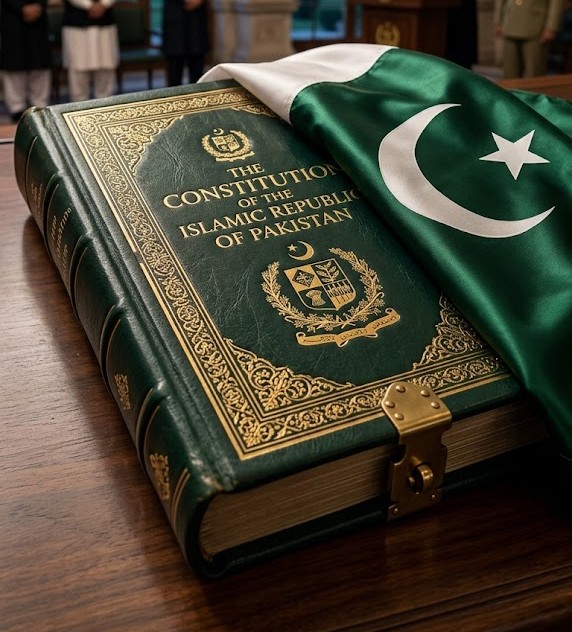
The Constitution of 1973 stands as the foundational legal instrument of the Islamic Republic of Pakistan, representing a delicate consensus between disparate political, religious, and regional factions. Unlike its predecessors of 1956 and 1962, the 1973 document established a federal parliamentary system, aiming to resolve the chronic instability that characterized the country's early decades. However, the subsequent fifty-three years have witnessed a complex evolution through twenty-seven formal amendments and several periods of constitutional suspension. This projection reflects a persistent struggle between civilian parliamentary supremacy and executive or military-led centralization. Evaluating these amendments requires an objective examination of how the legal framework has been adapted to address regional grievances, judicial independence, and the balance of power within the state apparatus.
The Genesis of the 1973 Framework
The 1973 Constitution was promulgated following the secession of East Pakistan, a crisis that necessitated a new social contract to prevent further fragmentation. It introduced a bicameral legislature, consisting of the National Assembly and the Senate, with the latter designed to provide equal representation to the provinces, thereby mitigating the dominance of the most populous province, Punjab.
The original document emphasized parliamentary sovereignty, where the Prime Minister served as the chief executive, and the President held a largely ceremonial role. This period of "constitutional purity" was short-lived, as the exigencies of political survival and institutional friction led to the first series of amendments under the government of Zulfikar Ali Bhutto. These early changes primarily focused on defining state boundaries and the status of specific religious groups, setting a precedent for using constitutional tools to address immediate socio-political pressures.
The Era of Executive Centralization (1977-1988)
The suspension of the Constitution in 1977 by General Zia-ul-Haq marked a pivotal shift in Pakistan's constitutional history. The subsequent Eighth Amendment (1985) fundamentally altered the character of the state. By introducing Article 58(2)(b), the amendment granted the President the discretionary power to dissolve the National Assembly.
This mechanism effectively transformed the system from a pure parliamentary model to a semi-presidential hybrid. The Eighth Amendment served as a tool for executive oversight over the legislature, resulting in the dismissal of four successive governments between 1985 and 1996. During this period, the legal focus shifted from provincial autonomy to the consolidation of central authority and the "Islamization" of the legal system, which introduced new layers of judicial review via the Federal Shariat Court.
Democratic Restoration and the Seesaw of Power (1997-2003)
The 1990s were characterized by a legislative tug-of-war regarding the powers of the President. The Thirteenth Amendment (1997), passed during Nawaz Sharif’s second term, stripped the President of the power to dissolve the Assembly, attempting to restore the original 1973 spirit of parliamentary supremacy.
However, this restoration was brief. The Fourteenth Amendment followed shortly after, imposing strict party discipline to prevent "floor-crossing" (defections). Critics argued that while these moves strengthened the office of the Prime Minister, they simultaneously weakened internal party democracy and legislative oversight. The institutional friction culminated in the 1999 military intervention, which once again placed the Constitution in abeyance. Under General Pervez Musharraf, the Seventeenth Amendment (2003) re-institutionalized the President’s power to dissolve the Parliament, mirroring the Eighth Amendment and concentrating power in a single individual who simultaneously held the offices of President and Chief of Army Staff.
The Eighteenth Amendment: A Paradigm Shift in Federalism
The passage of the Eighteenth Amendment (2010) represents the most significant structural overhaul since the Constitution’s inception. It was a rare instance of multi-party consensus aimed at de-centralizing power and correcting historical imbalances.
Key Structural Changes:
Removal of Article 58(2)(b): The discretionary power of the President to dissolve the National Assembly was abolished, returning the country to a parliamentary system.
Abolition of the Concurrent List: Power was devolved from the federal government to the provinces in sectors such as health, education, and environment.
Judicial Appointments: The amendment introduced a Judicial Commission and a Parliamentary Committee to oversee the appointment of judges, seeking to balance judicial independence with legislative oversight.
The Eighteenth Amendment redefined fiscal federalism through the National Finance Commission (NFC) Award, ensuring that a larger share of the divisible pool was allocated to the provinces. While celebrated as a victory for provincial autonomy, it also faced criticism from federalists who argued that the center was left with insufficient resources to manage national debt and security expenditures.
Regional Integration and National Security (2015-2018)
In response to the 2014 Peshawar school massacre, the Parliament passed the Twenty-First Amendment (2015). This controversial measure authorized the trial of terrorism suspects by military courts for a limited period. This marked a significant departure from standard constitutional protections and the separation of powers, demonstrating how national security exigencies could override traditional constitutional guarantees of due process.
A major milestone in the consolidation of the state was the Twenty-Fifth Amendment (2018), which facilitated the merger of the Federally Administered Tribal Areas (FATA) with Khyber Pakhtunkhwa. This ended the colonial-era governance model of the Frontier Crimes Regulation (FCR) and extended the jurisdiction of the Supreme Court and High Courts to the region, representing a significant step toward legal homogenization.
The Twenty-Sixth Amendment: Restructuring the Superior Judiciary
Enacted in October 2024, the Twenty-Sixth Amendment introduced substantial changes to the judicial hierarchy. The amendment was designed to recalibrate the balance between the legislature and the judiciary following a period of intense judicial involvement in political disputes.
Core Provisions:
Tenure of the Chief Justice: A fixed three-year term was established for the Chief Justice of Pakistan (CJP), replacing the previous system where the tenure was determined by the retirement age of 65.
Selection Committee: The amendment granted authority to a 12-member special parliamentary committee to nominate the CJP from the three most senior judges of the Supreme Court, moving away from the principle of automatic seniority.
Constitutional Benches: It mandated the creation of specialized constitutional benches within the Supreme Court and High Courts to hear matters involving the interpretation of the Constitution.
Environmental Rights: The insertion of Article 9A established a "clean, healthy, and sustainable environment" as a fundamental right.
Critics viewed these changes as an attempt to curb judicial independence, while proponents argued they restored parliamentary supremacy in the appointment process and addressed the backlog of non-constitutional cases.
The Twenty-Seventh Amendment: The 2025 Overhaul
The Twenty-Seventh Amendment (2025) represents one of the most sweeping reconfigurations of Pakistan's power structure since 1973. Passed in late 2025, this amendment moved beyond judicial appointments to address the very apex of the judicial and military command structures.
The Federal Constitutional Court (FCC)
The most transformative feature of the 27th Amendment is the establishment of the Federal Constitutional Court of Pakistan. This new body now sits at the apex of the judicial hierarchy for all constitutional matters, effectively confining the Supreme Court to non-constitutional, appellate jurisdiction.
The FCC holds exclusive jurisdiction over constitutional interpretation and inter-provincial disputes.
The Chief Justice and judges of the FCC are appointed by the President on the advice of the Prime Minister, granting the executive significant influence over the court’s leadership.
Judges of the FCC retire at 68, three years later than their counterparts in the Supreme Court.
Military Command and Article 243
The 27th Amendment significantly revised Article 243, altering the command architecture of the armed forces. It consolidated authority under a single Chief of Defence Forces (CDF). This role is automatically held by the sitting Chief of Army Staff, effectively cementing military command under a unified office. Furthermore, the amendment granted lifetime rank and limited immunity to officials holding senior positions like Field Marshal.
Executive Immunity and Centralization
Revisions to Article 248 granted the President lifetime immunity from criminal and civil proceedings, a privilege previously restricted to the duration of the presidential term. Additionally, the amendment revisited federal-provincial relations, allowing for greater federal oversight in administrative and security matters, which some legal experts interpreted as a subtle recentralization of authority.
"The 27th Amendment marks a fundamental shift in the civil-military balance and judicial hierarchy, centralizing constitutional interpretation while insulating the highest state offices from traditional accountability."
Institutional Challenges and the Path Forward
By 2026, the cumulative impact of these amendments has created a legal landscape that is significantly more complex than the original 1973 vision.
The transition from the 18th Amendment’s focus on devolution to the 27th Amendment’s focus on institutional consolidation indicates a new era in Pakistani constitutionalism. The current framework prioritizes "governance efficiency" and "national integrity" through centralized judicial and military structures.
Judicial Dualism: The coexistence of the Supreme Court and the Federal Constitutional Court requires a clear demarcation of roles to prevent jurisdictional overlaps and legal uncertainty.
Fiscal Federalism: Debates continue regarding the National Finance Commission (NFC) Award. The 27th Amendment’s provisions for harmonization have raised concerns that the federal government may seek to reclaim fiscal space from the provinces.
Accountability: The expansion of lifetime immunities for the executive and military leadership has sparked a debate on the principle of equality before the law. Advocates argue these protections are necessary for institutional stability, while critics fear they undermine the rule of law.
Conclusion
The evolution of Pakistan’s Constitution from 1973 to 2026 is a testament to the nation’s turbulent but persistent pursuit of a functional governance model. While the document has survived decades of political shifts, the amendments of the mid-2020s, specifically the 26th and 27th, have fundamentally altered its DNA. The shift from a unified judiciary to a specialized Constitutional Court, and the consolidation of military command, represents a departure from traditional parliamentary norms toward a more centralized state apparatus. As Pakistan navigates this new constitutional order, the endurance of the 1973 framework will depend on whether these structural changes can provide the stability they promise without compromising the fundamental rights and provincial inclusivity that remain the cornerstone of the federation.
Comments (0)
No comments yet. Be the first to comment!