Pak Imtehan
Competitive Exams Prep App (CSS-Global Affairs)
The geography of the Iranian plateau has historically functioned as a bridge between the East and the West, a reality that contemporary geopolitics has often attempted to suppress but never fully erased. Recently, Tehran’s decision to formalize conditional approval for the transit of humanitarian and essential cargo represents more than a logistical update; it is a calculated recalibration of its role within the Eurasian landmass. By opening specific arterial routes for medicine, food, and basic necessities, Iran is navigating the thin line between international isolation and regional indispensability.
This shift occurs against a backdrop of tightening regional constraints and the shifting priorities of the Global South. For Iran, the "Corridor of Necessity" is not an act of altruism, but a strategic maneuver to leverage its unique positioning as the shortest link between the Persian Gulf and the Caspian Sea, and by extension, the landlocked markets of Central Asia and the Caucasus.
The Strategic Calculus of Selective Openness
Iran's willingness to facilitate the movement of essential goods serves several domestic and foreign policy objectives simultaneously. At the core of this policy is the preservation of the International North-South Transport Corridor (INSTC). While broader trade remains hampered by primary and secondary sanctions, humanitarian carved-outs provide a legitimate framework to maintain and upgrade infrastructure that might otherwise stagnate.
The logic is straightforward: if the rail and road networks are kept active through the movement of grain and medical supplies, the "pipes" of regional trade remain unclogged. According to Dr. Nasser Hadian, a senior political scientist at the University of Tehran, "Tehran views its transit potential as a form of 'soft power' that is harder to sanction than its oil exports, creating a dependency for landlocked neighbors that ensures Iran cannot be entirely bypassed in the regional security architecture."
By granting conditional approval, Iran also signals to the European Union and the United Nations that it is willing to act as a responsible stakeholder in global supply chain stability. This is particularly relevant given the volatility of the Black Sea and the increasing costs of the Suez Canal route. The Iranian route offers a viable alternative for humanitarian agencies looking to reach Afghanistan or Central Asia with lower overheads and shorter lead times.
Operational Constraints and the "Conditional" Framework
The word "conditional" in this policy is the fulcrum on which the entire strategy rests. Tehran is not offering a blank check for all transit. The conditions are tiered, focusing on three primary areas: transparency of cargo, end-user verification, and the utilization of Iranian logistics infrastructure.
Cargo Categorization: Iran has implemented a strict dual-use assessment. While food and medicine move with relative ease, items categorized as "essential" (such as water purification chemicals or certain agricultural fertilizers) undergo rigorous inspections to ensure they do not violate domestic security protocols.
Financial Mechanics: One of the steepest hurdles for this corridor is the payment for transit fees. Since the Iranian banking sector remains largely disconnected from SWIFT, Tehran has pushed for the use of local currencies or barter arrangements, trading transit rights for commodities.
Infrastructure Sovereignty: Iran insists that a significant percentage of the cargo be moved via the Iranian Islamic Republic Railways (RAI) or Iranian-registered trucking fleets. This ensures that the economic "rents" of the corridor stay within the country, providing a vital source of non-oil revenue for the Ministry of Roads and Urban Development.
The International Transport Forum (ITF) noted in a recent briefing that "the success of any transit corridor through sanctioned territory depends less on the physical roads and more on the regulatory 'paper trail' that allows international insurers to provide coverage for the cargo." Iran’s current policy is a direct attempt to create that paper trail.
The Central Asian Dependence
For the "Stans:" Kazakhstan, Uzbekistan, Turkmenistan, Tajikistan, and Kyrgyzstan, the Iranian corridor is a matter of national security. These nations have historically relied on Northern routes through Russia. However, the geopolitical shifts of the last few years have forced a diversification of their export-import logic.
Uzbekistan, in particular, has been a vocal proponent of the Trans-Afghan corridor, which terminates at the Iranian port of Chabahar. By approving humanitarian passage, Iran is providing a "beta test" for these larger regional ambitions. If grain can move seamlessly from the port of Bandar Abbas to Tashkent, it proves the viability of the route for more lucrative, non-essential trade in the future.
This creates a regional "lock-in" effect. Once a neighbor invests in the logistical hardware: warehouses, customs offices, and rail gauges to interface with Iran, the cost of switching to an alternative route becomes prohibitively high. Iran is essentially using humanitarian aid as the "minimum viable product" to anchor its neighbors into its economic orbit.
The Port of Chabahar: The Humanitarian Gateway
Central to this policy is the Port of Chabahar on the Makran coast. Unlike Bandar Abbas, Chabahar has benefited from a unique status in international diplomacy, particularly regarding its development by India. Its location outside the volatile Strait of Hormuz makes it the ideal entry point for humanitarian cargo destined for Afghanistan.
The "conditional" nature of the passage here involves the interplay between Iranian authorities and the Indian companies managing the terminals. Tehran uses the humanitarian urgency of the Afghan crisis to push for faster infrastructure investment. By allowing large-scale shipments of wheat and medical aid to pass through Chabahar, Iran demonstrates to the world that it holds the keys to Afghan stability. This gives Tehran significant leverage in its dealings with the Taliban, as well as with international donors who require a reliable route for aid delivery.
Security and Surveillance: The Hidden Cost of Passage
The approval for transit is also a security mechanism. By channeling essential goods through specific, state-monitored corridors, Iran can monitor the flow of personnel and goods across its borders with greater precision. Every humanitarian convoy is a data point for the Iranian border guards and intelligence services.
There is also a defensive logic at play. A corridor that is actively being used by the UN, the Red Cross, or international NGOs provides a "humanitarian shield" of sorts. It complicates the military and economic calculus of Iran’s adversaries. Targeting infrastructure that is actively saving lives in Afghanistan or Tajikistan carries a diplomatic cost that most actors are unwilling to pay.
Economic Implications: Beyond the Transit Fee
While the direct revenue from transit fees is helpful, the broader economic implication lies in the development of the "hinterland." The routes designated for essential cargo pass through some of Iran’s most underdeveloped eastern provinces, such as Sistan and Baluchestan.
The necessity of maintaining these routes for international cargo forces the central government to invest in local infrastructure paving roads, extending electricity grids, and building maintenance hubs. This creates local employment and mitigates some of the internal socio-economic pressures that have historically fueled unrest in these frontier regions.
Furthermore, the "conditional" approval often includes requirements for "value-added" services. Iran is increasingly asking that bulk grain shipments be processed or packaged in Iranian facilities before being moved to their final destination. This transforms Iran from a simple "land bridge" into a "processing hub," moving the country up the value chain even within the constraints of a humanitarian framework.
The Geopolitical Ripple Effect
The opening of this corridor has forced a reaction from other regional powers. Turkey, which competes with Iran for the title of the ultimate "Eurasian Crossroads," has had to accelerate its own Middle Corridor projects. Meanwhile, the Gulf monarchies are watching closely to see if Iran’s logistical pivot will lead to a broader thaw in its regional relations.
Russia, too, sees the Iranian corridor as a vital safety valve. As Moscow seeks to pivot its entire trade apparatus toward the "Global South," the Iranian route to the Indian Ocean is the most direct path. By securing approval for "essential" goods now, Tehran and Moscow are laying the groundwork for a comprehensive trade architecture that functions entirely outside the Western-dominated financial system.
Risks and Bottlenecks
Despite the strategic clarity of the policy, several significant risks remain. The most prominent is the "Sanction Creep." There is always the danger that the definition of what is "essential" will be contested by the U.S. Treasury or European regulators. If a shipment of "medical equipment" contains high-end electronics that could be repurposed for military use, the entire corridor faces the risk of being shut down by secondary sanctions.
Internal Iranian bureaucracy also poses a threat. The overlapping jurisdictions of the Revolutionary Guard (IRGC), which often controls border crossings, and the civilian Ministry of Transport can lead to delays and "informal" taxes that negate the efficiency of the route. For the corridor to be truly successful, Tehran must move toward a more transparent, digitized customs process, a move that faces resistance from those who benefit from the current opacity.
The Future of the Iranian Land Bridge
As the world moves toward a more fragmented, multi-polar trade environment, the concept of "sovereign transit" will become increasingly important. Iran’s conditional approval for essential cargo is a precursor to a world where geography once again trumps ideology.
The policy indicates that Tehran has realized it cannot wait for a grand diplomatic bargain to restart its economy. Instead, it is piecing together a functional economy through "corridors of necessity." These routes create a reality on the ground that diplomats will eventually have to account for.
The long-term success of this initiative will depend on whether Iran can maintain the delicate balance between its security requirements and the logistical efficiency demanded by international shippers. If it succeeds, the Iranian plateau will once again become the indispensable link in the heart of Eurasia. If it fails, the country risks becoming a "landlocked island"—physically connected to everyone, but economically isolated from all.
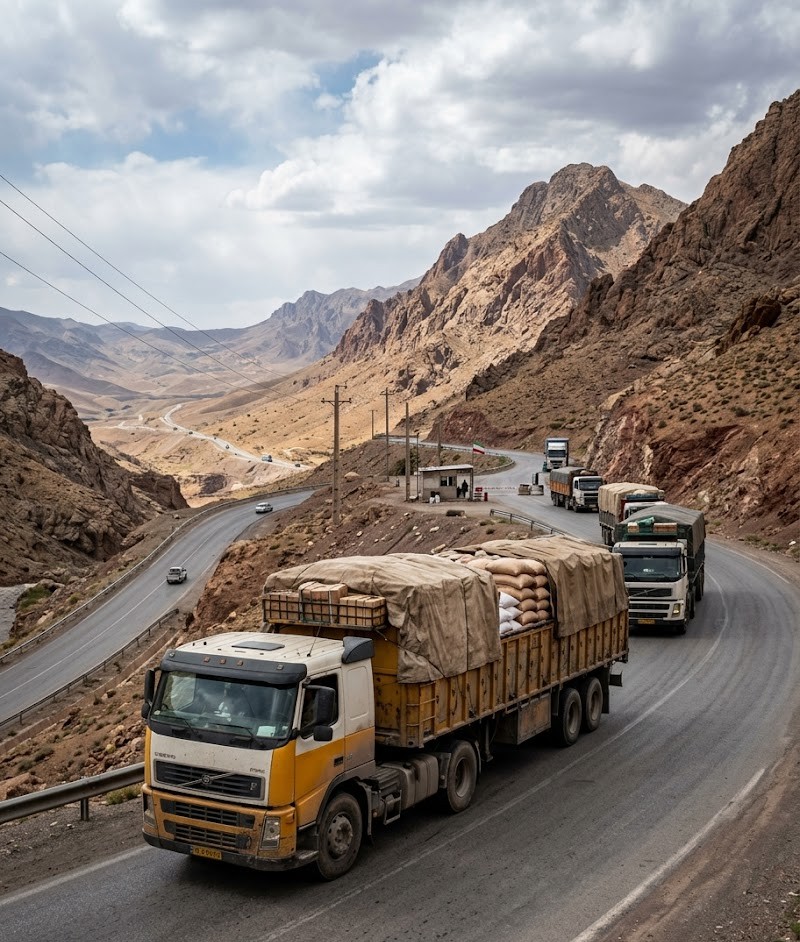
For now, the trucks moving grain from the docks of Chabahar to the bakeries of Kabul, and the trains carrying European medicine through the Alborz mountains toward the plains of Central Asia, are proof of a quiet but profound shift. The corridor is open, but the terms of passage remain firmly in Tehran’s hands. This is not just trade; it is the reconstruction of a geographic destiny.
Comments (0)
No comments yet. Be the first to comment!