Pak Imtehan CSS, PMS
Current Affairs
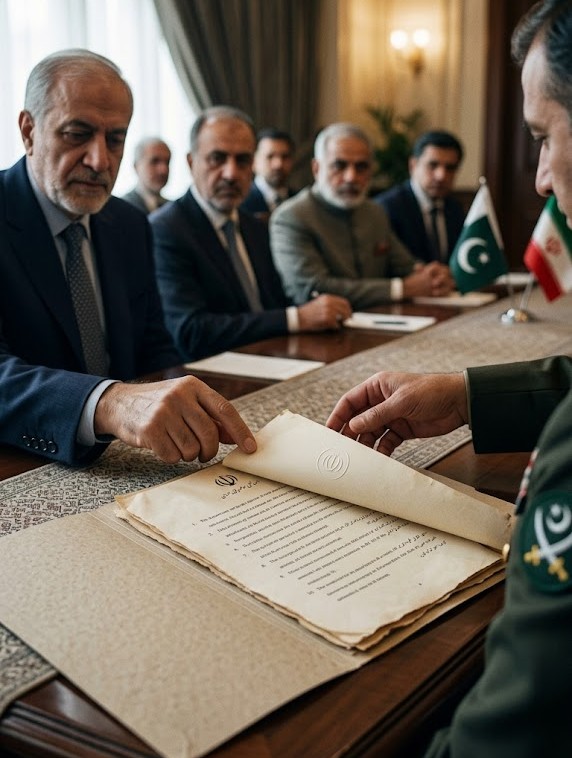
The sudden de-escalation in the Persian Gulf, occurring only ninety minutes before the expiration of a Washington-imposed deadline, represents one of the most significant shifts in modern geopolitical history. The 10-point proposal submitted by Tehran, delivered through the mediation of Islamabad, has transitioned from a desperate peace offering to a framework that President Donald Trump has described as a "workable basis on which to negotiate." This document is not merely a ceasefire agreement; it is a bid to fundamentally reorder the security architecture of the Middle East. By leveraging the blockade of the Strait of Hormuz, Iran has forced a dialogue that moves beyond tactical halts toward a comprehensive settlement of long-standing grievances.
The Iranian 10-Point Proposal: The Framework for Settlement
The proposal consists of ten integrated demands and concessions designed to settle the current conflict and address the underlying drivers of US-Iranian hostility.
1. Permanent Cessation of Hostilities: A definitive end to the war, rather than a temporary pause, including a formal "no-attack" guarantee from the United States.
2. Formal Acceptance of Uranium Enrichment: The recognition of Iran’s right to enrich uranium on its own soil under a revised oversight framework.
3. Comprehensive Sanctions Relief: The immediate removal of all primary and secondary US sanctions, returning Iran to the global financial system.
4. Institutionalized Control of the Strait of Hormuz: Recognition of Iranian authority over the waterway, including the implementation of a $2 million transit fee per vessel to fund regional reconstruction.
5. Full US Military Withdrawal: The departure of US combat forces from regional bases and deployment points across West Asia.
6. Cessation of Regional Attacks: An end to Israeli and US strikes in Lebanon and against the "Axis of Resistance" network.
7. Release of Frozen Assets: The unconditional unfreezing of all Iranian sovereign funds held in international accounts.
8. Joint Maritime Security Protocol: Establishing safe passage protocols through the Strait of Hormuz coordinated directly with the Iranian armed forces.
9. Revenue Sharing for Reconstruction: A commitment to share a portion of maritime transit fees with Oman to foster regional cooperation and repair war-damaged infrastructure.
10. UN Security Council Codification: Requirement for a binding UNSC resolution to make the final agreement enforceable under international law.
From Brinkmanship to Bargaining: The Strategic Context
The timing of this proposal is as critical as its content. Tehran’s decision to release the plan followed a period of intense kinetic exchange that saw global energy markets paralyzed. By effectively shutting the Strait of Hormuz, the artery for approximately 20% of the world’s petroleum and liquefied natural gas, Tehran created a level of global economic contagion that the current US administration could not ignore.
The Iranian Supreme National Security Council has explicitly framed this plan as a "significant diplomatic victory," a narrative intended both for domestic consumption and as a signal to its regional allies. However, the proposal’s "workability" lies in the trade-offs it offers. Iran is offering to reopen the world's most vital energy chokepoint in exchange for a seat at the table where its core "red lines," specifically enrichment and regional influence, are finally recognized.
The Strait of Hormuz as a Sovereign Tollway
Point four of the plan, the imposition of a transit fee, represents a radical departure from the previous status quo. Historically, the Strait has been treated as an international waterway governed by the UN Convention on the Law of the Sea (UNCLOS). By proposing a fee-based transit system, Iran is attempting to transition from a "security provider" or "threat" in the Strait to a "sovereign regulator."
The inclusion of Oman in a revenue-sharing model (Point 9) is a masterstroke of regional diplomacy. It seeks to bind a traditionally neutral neighbor into the new Iranian-led maritime order, making it harder for a coalition of Western powers to challenge the legality of the fees without also confronting Muscat.
The Economic Logic of Reconstruction
The proposal views the conflict through an economic lens as much as a military one. The demand for the unfreezing of assets and the removal of all primary and secondary sanctions (Points 3 and 7) is aimed at immediate liquidity. For Tehran, a peace deal that does not provide a path to economic solvency is a strategic failure.
The "workable" nature of the plan, from Washington's perspective, may lie in the potential for a "Trumpian" deal: a massive, grand bargain that ends "forever wars" and stabilizes oil prices, even if it requires significant concessions on enrichment. As one senior policy analyst noted:
“The proposal shifts the focus from ‘maximum pressure’ to ‘maximum pragmatism,’ where the price of global energy stability is the formal recognition of Iran as a regional heavyweight.”
Geopolitical Implications: The End of the "Old" Middle East
The most contentious point for the Pentagon remains Point 5: the demand for a total US military withdrawal from the region. While unlikely to be accepted in its entirety, it serves as a high opening bid. It signals that Iran’s price for reopening the Strait is a fundamental reduction in the American footprint.
If negotiations proceed on this basis, we are witnessing the sunset of the post-2003 regional order. A deal based on these ten points would necessitate:
A new maritime legal reality: Moving away from the principles of "innocent passage" toward a regulated corridor.
Nuclear normalization: Accepting Iran as a "threshold state" with recognized enrichment capabilities.
Regional multipolarity: Acknowledging the "Axis of Resistance" as a permanent political and military fixture that cannot be bombed out of existence.
Forward-Looking Challenges
The primary obstacle to this plan is the "binding" nature of Point 10. Given the history of the JCPOA, Tehran is unwilling to accept an executive agreement that a future US president can tear up. They are demanding a UN Security Council resolution to codify the peace. This introduces a layer of complexity involving Russia and China, both of whom have an interest in seeing US influence in the region diminished but may be wary of Iranian hegemony over the Strait.
Furthermore, the exclusion of Lebanon and other regional theaters from the initial ceasefire window suggests that the "comprehensive" nature of the 10-point plan will be tested immediately. If strikes continue against Iranian proxies, the "hands upon the trigger" mentioned by the IRGC will likely return to the Strait.
Comments (1)
Asif Saleem
Apr 8, 2026
Perfect