Pak Imtehan
Analysis
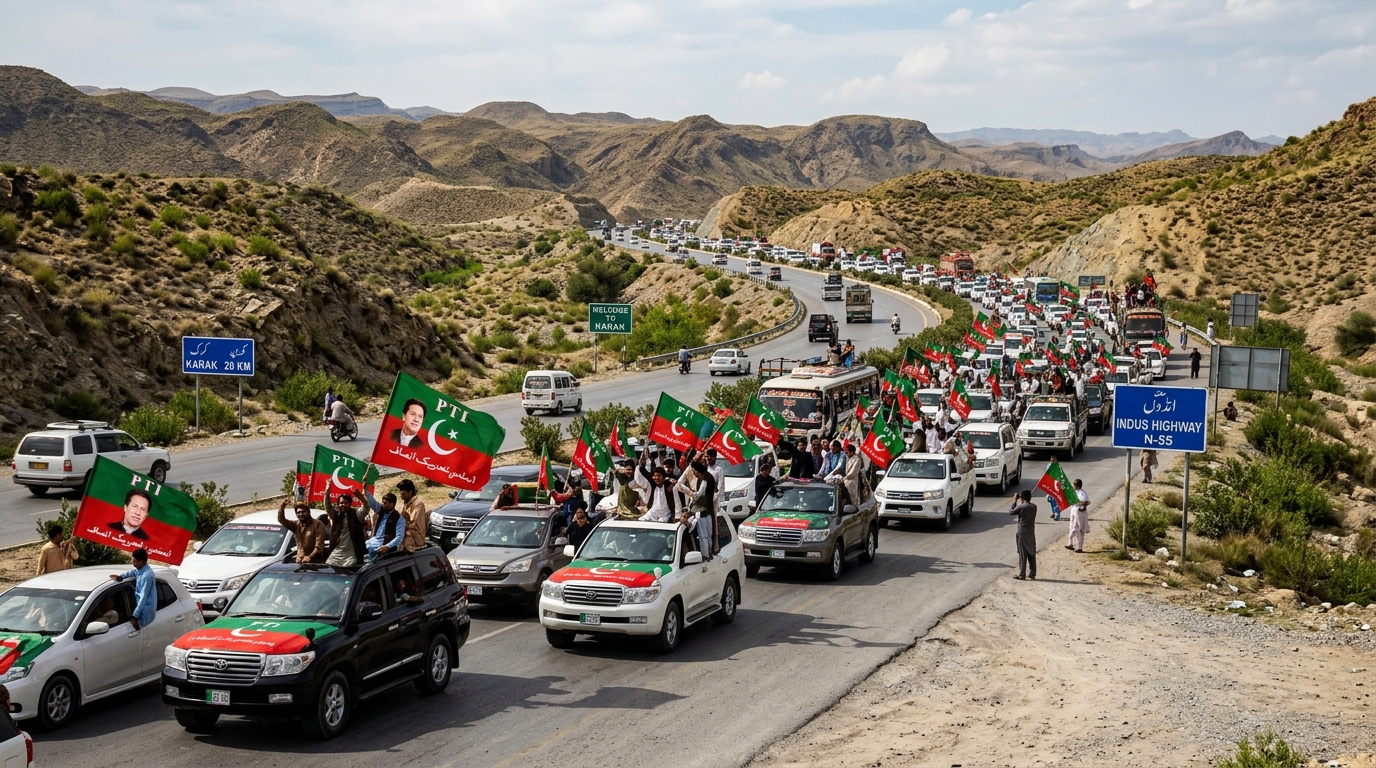
The PTI long march that left Lakki Marwat on Sunday, and resumes from Karak towards Kohat today, is being sold by both sides as a test of political strength. It looks more like a failure of political nerve. According to sources quoted by Geo News, government and opposition negotiators had settled about 95 percent of their differences before talks broke down in the early hours of Sunday. What remains is a dispute over a prison visit, a doctor's access and a provincial assurance on counterterrorism. These are serious matters. None of them justifies a week of blocked highways, idle trucks and a possible standoff on the banks of the Indus.
The march is led by Khyber Pakhtunkhwa (KP) Chief Minister Sohail Afridi. Its central demand is the release of Pakistan Tehreek-e-Insaf (PTI) founder Imran Khan, who turns 74 today in Adiala jail in Rawalpindi. The party also wants freedom for his wife, Bushra Bibi, and for detained leaders and workers. Under the schedule Mr Afridi announced, the convoy moves through Kohat and Peshawar before gathering at Khairabad on Thursday, October 8, where the next phase is to be declared. The federal answer has been blunt. "The long march will not be allowed to enter the limits of Islamabad," said Rana Sanaullah, the Prime Minister's Adviser on Political Affairs, according to Geo News.
What makes the collapse frustrating is how much had already been agreed. National Assembly Speaker Ayaz Sadiq chaired the talks. Interior Minister Mohsin Naqvi, Rana Sanaullah and Pakistan Peoples Party (PPP) leaders, including Sherry Rehman, sat on one side. PTI Chairman Barrister Gohar Ali Khan, Senate Opposition Leader Allama Raja Nasir Abbas and Secretary General Salman Akram Raja sat on the other. According to Aaj News, the draft would have freed detained PTI leaders, arranged meetings with Imran Khan, moved him and Bushra Bibi to hospital care and fixed hearings in his cases. In return, the party would have called off the PTI long march and backed counterterrorism efforts in the province.
The two sides tell different stories about why that package died. Mr Sanaullah said the KP government refused to assure the Centre of its support for counterterrorism operations, a condition he called "not acceptable in any way". Mr Raja, according to The News, blamed the federal demand that the province take responsibility for operations launched in KP. Mr Abbas said the gaps were over "small things", but admitted that a meeting with Imran Khan remained unresolved. Geo News reported that the government had also refused a request for his personal physician to see him. Read together, these accounts describe two parties that agreed on the hard questions and then fell out over trust.
The counterterrorism dispute deserves to be taken seriously on its merits. Khyber Pakhtunkhwa carries the heaviest burden of militant violence in the country, and no federal strategy can work there without the provincial government's police, administration and political cover. On the march, Mr Afridi complained that decisions about the province are taken in "closed rooms". That reflects a real grievance over drone strikes and military operations that local people feel they never agreed to. Both points can be true at once. What does not make sense is turning a question of national security into a bargaining chip in a negotiation about a protest march. Security cooperation should be settled in its own forum, not traded for a jail visit.
The bill for the failed talks and the PTI long march is already arriving, and the public is paying it. Dawn reported that truckers at Karachi Port were refusing northbound trips because police had requisitioned more than 2,000 vehicles since September for use in roadblocks. Transporters said demurrage charges had reached Rs30,000 to Rs40,000 per container per day. Section 144, which bans public gatherings, is in force across several southern KP districts until October 10. A convoy led by former chief minister Ali Amin Gandapur turned back near Yarik after hours stuck at blockades. Meanwhile, Information Minister Attaullah Tarar and KP Governor Faisal Karim Kundi have spent their energy on a row over Mr Afridi's use of a government helicopter.
Recent history offers little reason to believe that this confrontation will settle anything. The PTI's last march on the capital, in November 2024, reached D-Chowk before security forces cleared the area overnight. Arrests followed, the party regrouped, and the underlying dispute stayed exactly where it was. Imran Khan was removed as prime minister through a no-confidence vote in April 2022. He is now serving a 14-year sentence in the Al-Qadir Trust case and a 17-year sentence in the second Toshakhana case. He denies wrongdoing and calls the cases political. The government says the courts acted on evidence. Neither containers on the motorway nor crowds at Khairabad will change those verdicts. Only the appeals process can.
There is still a narrow path out. Mr Afridi has said the march would be called off if the government gave written assurances, according to the news site Nukta. Mr Sanaullah's remarks left the door open to more talks. The sensible order of business is not complicated. Access for Imran Khan's doctors and family is a humane obligation towards any prisoner, and it should be granted without waiting for a political bargain. Federal and provincial cooperation on counterterrorism should be agreed separately, in writing, through the existing security forums. That would remove the two issues that broke the talks and leave both sides with a deal they have already largely written.
The next four days will decide where the PTI long march ends up. Its first phase runs entirely through Khyber Pakhtunkhwa, where the PTI governs. The real test comes at Khairabad on Thursday, when the party says it will announce whether it intends to cross into Punjab. The federal government has drawn its line at the edge of Islamabad. The PTI has drawn its own around a prison cell in Rawalpindi. If the PTI long march ends in another night of tear gas and arrests, it will not be because the two sides could not agree. It will be because, with 95 percent of a settlement on the table, neither was willing to give up the last five.
Comments (0)
No comments yet. Be the first to comment!