Pak Imtehan
Analysis
Houthi attack on Aramco shows Yemen's forgotten war has become everyone's problem
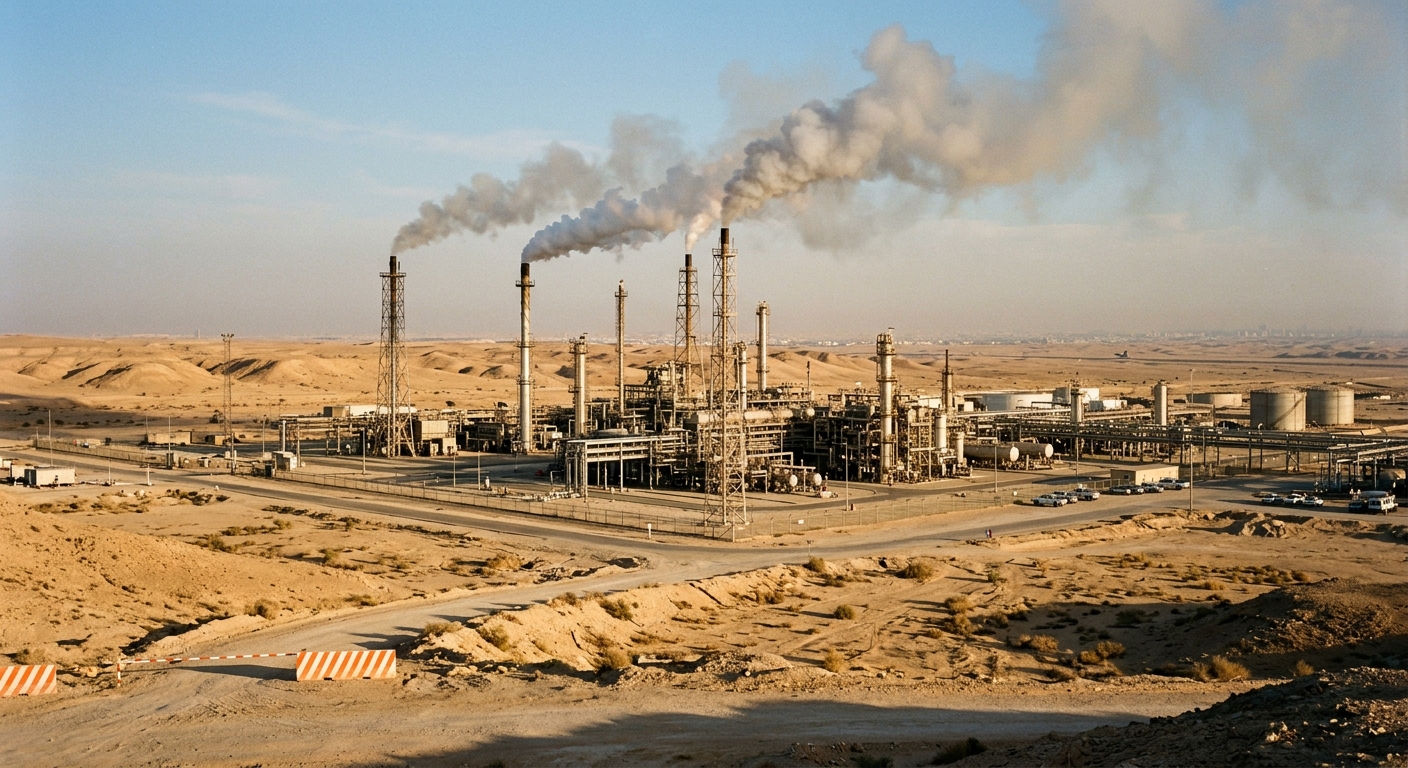
For most of the past four years, the war in Yemen was something the rest of the world could afford to forget. A truce agreed in 2022 had quietened the front lines, the cameras moved elsewhere, and Yemen's suffering slipped back into the footnotes of humanitarian reports. The Houthi attack on Aramco facilities near Riyadh on Saturday should end that complacency. The Houthis say they fired ballistic missiles and drones at an oil facility near the Saudi capital and at Khurais, one of the kingdom's most important oil fields. Flames and thick smoke were seen rising from an Aramco site south of the city. Saudi Arabia has not confirmed the attack, but the message was clear enough.
Riyadh answered with a wave of air strikes on Sanaa, the Houthi-held capital, and the Houthis say dozens of raids hit Yemen within a single day. On the ground, the internationally recognised government has announced an offensive to retake territory held by the Houthis, and fighting around Taiz has cost scores of lives on both sides. The Saudi-led coalition has dismissed the Houthi claims about Aramco as "misleading". Whatever the damage from the Houthi attack on Aramco turns out to be, the pattern is unmistakable. A war once contained inside Yemen's borders is now being fought in the skies over Saudi Arabia, and it is edging closer to the heart of the world's oil supply.
The road back to war has been remarkably short. The truce began to unravel in July, when Iran flew a Houthi delegation into Sanaa without Saudi permission, breaking a practice that had held for about a decade. Riyadh responded by striking Sanaa airport, and the Houthis hit back at Saudi territory for the first time since 2022. In September they seized the Red Sea port of Mocha and islands in the Bab al-Mandab Strait. That narrow passage links the Red Sea with the Gulf of Aden and carries a large share of trade between Asia and Europe. Strikes on southern Saudi cities followed, and late last month a drone hit a power station in Madinah, an attack the Houthis denied.
None of this can be understood in isolation. The United States is already at war with Iran, the Houthis' main backer, and oil tankers are still being struck near the Strait of Hormuz. President Donald Trump has said that conflict will end "very soon", yet American forces in the region keep growing. In this setting, Yemen has become a second front in a wider regional struggle, one in which Iran's allies can raise the cost for Washington's Gulf partners without Iran having to act directly. Every strike on Saudi soil sends a signal far beyond Yemen, and it is being read with great care in every capital along the Gulf, from Abu Dhabi to Doha.
What makes this moment especially dangerous for Riyadh is that it faces the threat largely on its own. Saudi Arabia has asked Washington for military help in Yemen, and so far Mr Trump has said no. For a kingdom that has built its security around the American relationship for decades, that refusal is a sobering lesson. It helps explain why Saudi Arabia has been widening its circle of partners, including through new defence agreements with Pakistan and Türkiye. It also helps explain why the Houthis feel emboldened. An adversary that believes its target lacks a powerful protector has every incentive to keep testing it, and the Houthis have promised further strikes until Saudi raids on Yemen stop.
Oil markets have so far held their nerve, but only just. Brent crude rose to around $103 a barrel after news of the Houthi attack on Aramco, before easing back towards $101 on Monday. The main reason for the calm is emergency supply. The Group of Seven (G7) has agreed to release 100 million barrels of crude and diesel, and some 325 million barrels have been drawn from emergency reserves since March. Tim Waterer of KCM Trade said the reserves were "taking some of the immediate supply anxiety out of the price". Stockpiles, however, are finite. If attacks on Saudi oil infrastructure become routine, no amount of releases will hold prices down for long.
Behind the missiles and the market numbers lies a human cost that is easy to overlook and impossible to justify. Three-quarters of Yemen's people cannot meet their basic food needs, according to the World Food Programme, and about 82,000 people have been driven from their homes since September alone. These are not side effects to be dealt with once the guns fall silent. A country where most families cannot feed themselves is a country where armed groups find recruits with ease and where any future peace will rest on weak foundations. Every month of renewed fighting makes a settlement harder to build and easier to break, which is why relief and diplomacy have to move together.
For Pakistan, the stakes are unusually high. Islamabad signed a Strategic Mutual Defence Agreement with Riyadh in September 2025, under which an attack on one country is treated as an attack on both. In August it joined Saudi Arabia and Türkiye in a further defence pact. When the Madinah power station was hit last month, the Foreign Office called it a "grave provocation". Saudi Arabia is also home to the largest community of Pakistani workers abroad and is one of Pakistan's biggest sources of remittances and oil. At the same time, Pakistan shares a long border with Iran and has no interest in being pulled into a regional proxy war on its own doorstep.
So far, Islamabad has struck the right balance. At the United Nations Security Council in September, its envoy condemned Houthi attacks on the kingdom while calling for an inclusive, Yemeni-led political process under UN auspices. That pairing of firm solidarity with Saudi Arabia and steady support for diplomacy is the position Pakistan should hold. It has standing in Riyadh, working relations with Tehran and an open channel to Washington, which gives it more room than most to push quietly for calm. A lasting rise in oil prices would hit Pakistan's import bill and its fragile economy hard, so a negotiated end to the fighting is not only a moral preference but a national interest.
The coming days will show whether this weekend marks a turning point or a warning. Much will depend on what Aramco eventually reveals about the damage at Khurais, on whether Washington reconsiders its refusal to help Riyadh, and on whether the Houthis carry out their threat of further strikes. The Houthi attack on Aramco has made one thing plain. Yemen's war can no longer be left to burn quietly at the edge of the map, because its sparks now land on the world's oil supply and on the security of the Gulf. In 2022, patient diplomacy produced a truce that held for four years. That effort now needs to begin again, and quickly.
Comments (0)
No comments yet. Be the first to comment!