Pak Imtehan
Climate Change
COP31 in Antalya: What Is at Stake for the World’s Climate Goals
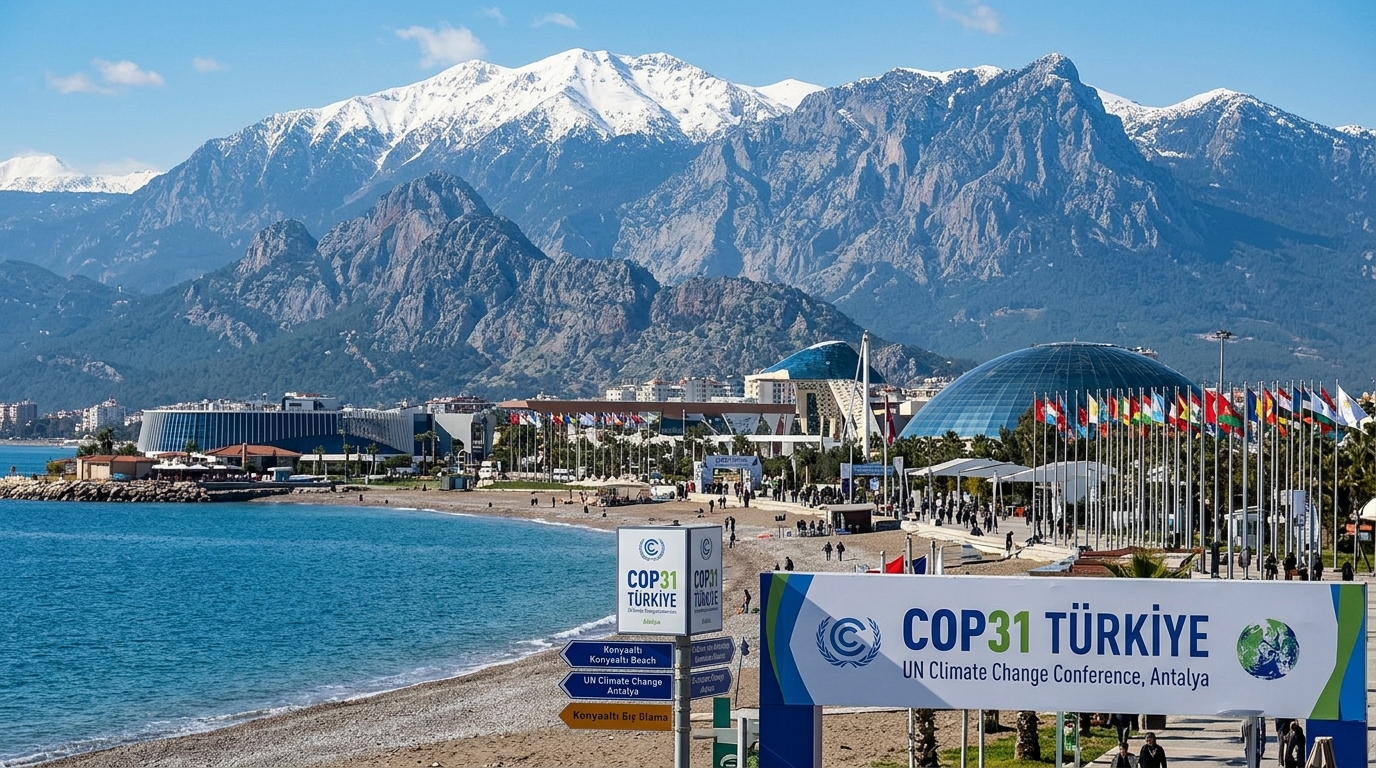
When delegates from nearly every country gather on the Mediterranean coast of Türkiye next month, they will confront a familiar but sharpening problem: the distance between what governments have promised and what the climate actually requires. The 31st United Nations Climate Change Conference will be held in Antalya from November 9 to 20, 2026, at a moment when the global climate regime is strained by geopolitical rivalry, energy insecurity and the absence of the world’s largest economy from the Paris Agreement.
The summit is being framed as a turning point from pledges to delivery. Whether it lives up to that framing will shape the credibility of international climate cooperation for the rest of the decade.
An Unusual Arrangement at the Top
COP31 is the product of a diplomatic compromise. Australia had campaigned to host the conference in Adelaide, but abandoned its bid after a months-long stalemate. Türkiye then secured the presidency and hosting rights in a deal with Australia, a decision backed by 196 countries.
The result is a split leadership model with no clear precedent. Australian minister Chris Bowen will serve as “President of Negotiations” with exclusive authority over the negotiating process, while Turkish Environment Minister Murat Kurum will be COP President and hold the gavel that formally adopts decisions. A preparatory meeting is also planned in the Pacific, reflecting the close involvement of island states facing existential risks from rising seas.
This arrangement could prove a strength, combining Türkiye’s convening role with Australia’s negotiating experience and Pacific credibility. It could equally create friction if the two presidencies pull in different directions during the final hours when deals are usually struck.
The “COP of Implementation”
Türkiye has branded its presidency around delivery. Kurum has described the vision as the “COP of Implementation”, guided by three principles of dialogue, consensus and action.
The centrepiece is an Action Agenda unveiled at the Bonn climate meetings in June. It contains 10 priority themes, six global implementation goals, 11 initiatives and 13 supporting outputs. The themes range from zero waste, oceans and food security to climate-resilient cities, green industrialisation, clean energy, education and resilient health systems.
Several targets carry concrete numbers. The presidency aims to halve the growth in global waste by 2035 and cut energy consumption intensity in buildings by at least 25% over the same period. According to Kurum, these targets could help reduce emissions by 8.5 to 10 billion tonnes of carbon dioxide by 2035.
The focus on waste and methane gives COP31 a distinctive identity. Methane is a powerful short-lived greenhouse gas, and reducing it is one of the fastest ways to slow near-term warming. Critics, however, will note that voluntary action agendas do not carry the legal weight of negotiated decisions.
The political high point will come early, with a leaders’ summit on November 11 and 12 at which President Recep Tayyip Erdogan and United Nations Secretary-General António Guterres are expected to welcome heads of state.
The Ambition Gap
Behind the summit’s branding lies an uncomfortable arithmetic. Under the Paris Agreement, countries submit national climate plans, known as Nationally Determined Contributions, every five years. The latest round, covering targets to 2035, falls well short of what science demands.
An updated United Nations analysis released at COP30 projected that global emissions would fall by 12% by 2035 compared with 2019 levels. Yet limiting warming to 1.5 degrees Celsius requires cuts of around 60% over the same period, and Guterres has warned that national pledges are delivering only a fraction of the reductions required.
The gap between 12% and 60% is the most important figure hanging over Antalya. COP31 cannot close it alone, but it can determine whether countries treat the shortfall as a call to strengthen their plans or quietly accept that the 1.5 degree threshold is slipping out of reach.
The Fossil Fuel Question
The most contested issue is the one COP30 left unresolved. At the 2023 Dubai summit, countries agreed to transition away from fossil fuels but set no path for doing so. In Belém, more than 80 countries pushed for a roadmap, and early drafts included one, but all references to fossil fuels were removed from the final decision.
The issue then moved outside the formal process. The COP30 President pledged to support two voluntary roadmaps, one on deforestation and one on a just transition away from fossil fuels. That roadmap is due before COP31 and will represent a coalition of willing countries rather than a consensus outcome.
Australia’s role here is complicated. Bowen has said Australia will continue to argue for a transition away from coal, oil and gas, yet the country remains a major coal and gas exporter, which makes its position difficult to reconcile.
Energy security has added a new dimension. At the Bonn talks, Bowen pointed to the fragility of fossil fuel supply chains, exposed by the closure of the Strait of Hormuz during the conflict between the United States and Iran. Supply shocks of this kind strengthen the case that reducing dependence on imported oil and gas is a matter of national security as much as climate policy.
Finance: The Unresolved Foundation
No issue shapes developing countries’ positions more than money. At COP29 in Baku, governments agreed a new climate finance goal of $300 billion a year by 2035, alongside a wider effort to mobilise $1.3 trillion annually from public and private sources. COP30 followed with a roadmap for reaching that larger figure and a package calling for a tripling of adaptation finance for vulnerable countries.
Turning these commitments into reality has proved difficult. At the June talks in Bonn, no agreement was reached on mitigation or adaptation, as countries could not agree to reference the tripling goal in the final text.
For many developing nations, the logic is simple: ambitious emissions cuts and adaptation plans depend on finance that has not yet arrived. Türkiye’s proposed Climate Implementation Bridge, designed to help countries turn national priorities into finance-ready project portfolios, responds to this problem. Its value will depend on whether investors and donors actually fund the projects it identifies.
The Shadow of American Absence
COP31 will be the first climate summit since the United States formally left the Paris Agreement. The withdrawal took effect on January 27, 2026, making the United States the only country to quit the pact twice. Washington is also seeking to exit the United Nations Framework Convention on Climate Change itself.
The departure of the world’s second-largest emitter weakens collective ambition and removes a major potential source of finance. It also shifts diplomatic weight toward the European Union, China and coalitions of vulnerable states, which must now carry greater responsibility for maintaining momentum.
What Success Would Look Like
Expectations for Antalya should be measured. A credible outcome would include a clear process pushing countries to strengthen their 2035 plans, renewed commitment to triple adaptation finance, visible political backing for the fossil fuel transition roadmap, and transparent tracking of the waste, methane and buildings targets in the Action Agenda.
Failure would look like a summit that produces well-designed initiatives and positive announcements while leaving the core negotiated questions of finance and fossil fuels unresolved for another year.
Conclusion
COP31 sits between two forces pulling in opposite directions. On one side are the physical realities of a warming planet and a growing recognition, sharpened by recent energy shocks, that fossil fuel dependence carries strategic risk. On the other are fractured geopolitics, the absence of the United States and persistent disputes over who pays for the transition.
Türkiye has promised a “COP of Implementation.” The test in Antalya will be whether that promise produces negotiated outcomes that change behaviour, or whether implementation becomes a polite substitute for the harder decisions the climate crisis continues to demand.
Comments (0)
No comments yet. Be the first to comment!