Pak Imtehan
Competitive Exams Prep App (CSS | PMS)
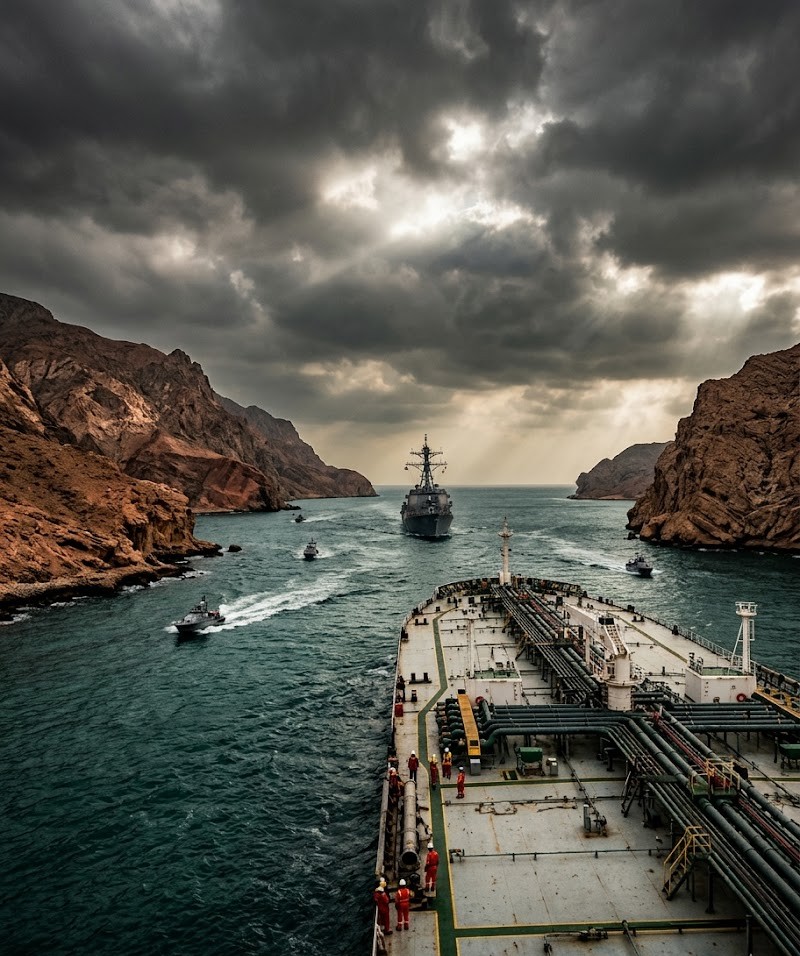
On the morning of March 2, 2026, the global energy market did something it hadn’t done in decades: it stopped breathing. Following a series of high-intensity military strikes in the region, the Strait of Hormuz, a 21-mile-wide jugular vein through which one-fifth of the world’s petroleum and 20% of its liquefied natural gas (LNG) flows was declared effectively closed to commercial traffic. This was no longer a theoretical "war game" played out in think tanks; it was a hard reality that saw 150 tankers anchor in a state of paralysis, while P&I insurance for the Persian Gulf was cancelled almost overnight.
The fallout has triggered a seismic re-engineering of the world’s maritime architecture. As the "Hormuz Deadlock" persists, the logistics of 2026 are no longer about the fastest route, but the only route. From the resurgence of the Cape of Good Hope to the desperate expansion of overland pipelines, the maps of global commerce are being redrawn under the pressure of kinetic conflict and soaring premiums.
The Sudden Paralysis of the World’s Energy Jugular
The current crisis differs from historical "Tanker Wars" due to the sophistication of modern denial tactics. In 2026, the closure isn't just about physical blockades; it is a multi-layered exclusion zone enforced by GNSS jamming, satellite spoofing, and autonomous sub-surface drones. When major carriers like Maersk and Hapag-Lloyd suspended transits in early March, it signaled that the risk-to-reward ratio for the Strait had finally broken.
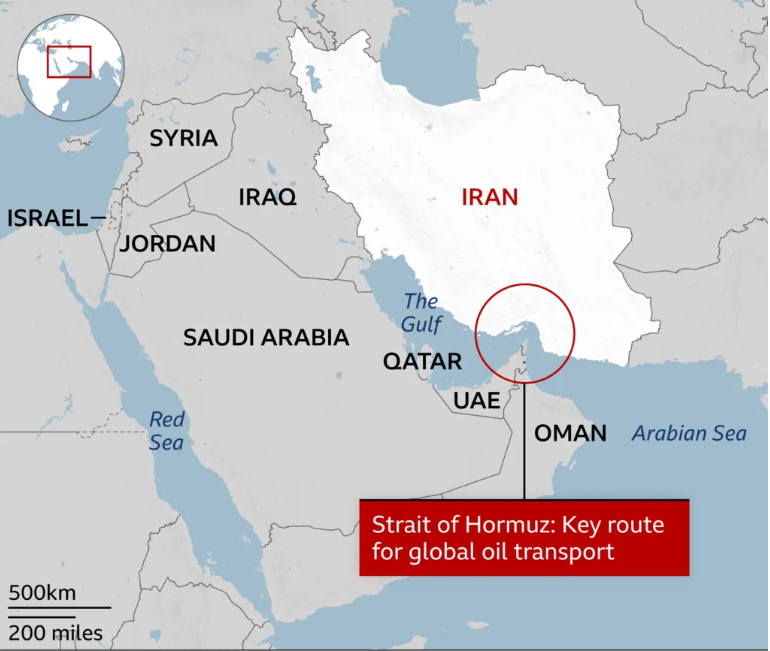
Source: BBC
For the first time in modern history, both major Middle Eastern chokepoints, the Suez Canal/Red Sea corridor and the Strait of Hormuz are simultaneously compromised. The Red Sea, already reeling from resumed Houthi attacks, cannot serve as a relief valve. This double-lock on Middle Eastern waters has forced a total pivot in how commodities move from East to West.
The Long Way Around: Resurrecting the Cape Route
The most immediate and visible shift has been the mass migration of vessels to the Cape of Good Hope. What was once a historical relic of the pre-Suez era has become the primary artery for Asia-to-Europe trade. This detour is not a minor adjustment; it adds approximately 3,500 to 4,000 nautical miles to a round trip.
Extended Lead Times: Voyages that previously took 25 days now stretch to 40, creating a "floating inventory" crisis where goods are trapped at sea.
Fuel and Emissions: The massive increase in fuel consumption has sent bunker fuel prices soaring, while simultaneously undoing years of maritime carbon-reduction targets.
The "Cape Surcharge": Shipping lines have implemented emergency "Hormuz Surcharges," often doubling the freight cost for containers originating in the Indo-Pacific.
Saudi Arabia’s East-West Pivot: The Pipeline Lifeline
With the Persian Gulf coast effectively bottled up, the strategic focus has shifted to the Red Sea port of Yanbu. Saudi Arabia has aggressively ramped up the utilization of its East-West Pipeline (Petroline), which allows crude oil to bypass the Strait of Hormuz entirely.
By pumping oil across the desert to the Red Sea, the Kingdom can still export to Western markets, provided the vessels can safely navigate the lower Red Sea or originate from the Mediterranean. However, this infrastructure has limits. The pipeline's capacity, while vast, cannot replace the 20 million-plus barrels that typically transit the Strait daily. This has created a tiered market where "Red Sea Loading" commands a significant premium over "Gulf Loading" grades, which are currently stranded in storage tanks.
The LNG Ghost Town: Qatar’s Force Majeure
Perhaps the most "chilling" aspect of the 2026 crisis is the silence in the North Field. Qatar, the world’s LNG powerhouse, was forced to declare force majeure on gas contracts in March after regional infrastructure was caught in the crossfire.
Unlike oil, which can sometimes be trucked or piped with difficulty, LNG relies on a highly specialized, rigid supply chain of cryogenic tankers. These ships are essentially "floating bombs" in a high-risk zone, and no insurer will touch them. Consequently, Asian economies particularly Japan and South Korea are seeing a massive redirection of LNG from the United States and West Africa, even at exorbitant spot prices, to fill the 20% global supply hole left by the Qatari shutdown.
The Rise of Multimodal Land Bridges
With the sea lanes contested, the "Middle Corridor" and other overland routes have transitioned from ambitious projects to essential survival kits. We are seeing an unprecedented surge in rail and truck trans-shipment through Central Asia.
The Trans-Caspian Route: Cargo from China is increasingly moving via rail through Kazakhstan, across the Caspian Sea, and into Europe via Azerbaijan and Georgia.
Trucking the Desert: In a desperate bid to keep regional trade alive, "land-bridge" trucking convoys are moving goods from the UAE’s Jebel Ali port (for whatever can still dock there) across the Saudi desert to Mediterranean ports.
While these land routes can only handle a fraction of the volume of a Triple-E class container ship, they have become the "gold route" for high-value electronics and medical supplies that cannot wait for the 40-day Cape trek.
The Insurance Wall and the VLCC Crisis
The redrawing of shipping routes isn't just about geography; it's about finance. In March 2026, tanker rates for Very Large Crude Carriers (VLCCs) hit multi-decade highs. This wasn't just due to the scarcity of ships, but the "Insurance Wall."
When underwriters at Lloyd’s of London designate a zone as "Listed," the additional premiums can exceed the value of the freight itself. This has created a bifurcated shipping world: a "white fleet" that follows the long Cape route with full insurance, and a "shadow fleet" that attempts to run the gauntlet of the Strait using opaque insurance structures and "dark" transponders. The latter has led to a spike in maritime accidents, further complicating the environmental and security landscape.
Geopolitical Realignment: The China-India Divergence
The crisis has forced a fascinating divergence in how the world's two most populous nations secure their energy. China has doubled down on its "Polar Silk Road," attempting to push more volume through the Northern Sea Route (NSR) across the top of Russia. Despite the seasonal ice and technical challenges, the NSR offers a route that is entirely immune to Middle Eastern instability.
India, conversely, finds itself in a precarious position. Its proposed India-Middle East-Europe Economic Corridor (IMEC) is effectively on ice. New Delhi has had to pivot toward securing long-term contracts from the Atlantic basin and Russia, fundamentally altering its decades-long dependency on the Persian Gulf.
The events of 2026 have proven that "maritime chokepoints" are not just points on a map, they are the single points of failure for modern civilization. The redrawing of shipping routes today is a permanent shift in the global psyche. Even if the Strait of Hormuz reopens tomorrow, the trust in the "just-in-time" maritime model has been shattered. The world is moving toward a "Just-in-Case" logistics framework, where redundancy, overland corridors, and Arctic paths are no longer optional backups, but the new foundations of global trade.
Comments (1)
Ahmad Abdullah
Apr 4, 2026
Very Informative