Pak Imtehan
CSS & PMS App
Title: Fighting Terror in the Court
Writer: Amir Jahangir
Published in: The News International
Date of publication: 5 October 2026
Out of every ten terrorism suspects sent for trial in Pakistan over a recent three-and-a-half-year period, roughly one was convicted. That single figure explains a problem that police raids and military operations cannot solve on their own. Catching a suspect is only the first step. The state must then investigate the case, collect evidence that a court will accept, keep witnesses and officials alive, and win a conviction. At each of these stages, the system has been failing.
1. A Long War With a Heavy Price
Pakistan has been fighting terrorism for more than two decades. According to the National Counter Terrorism Authority (NACTA), the federal body that coordinates counter-terrorism policy, the country lost about 83,000 lives between 2001 and 2022 and suffered economic losses of more than Rs35 trillion.
Against this cost, the prosecution system has performed poorly. Figures presented by the Ministry of Interior to the Senate cover the period from January 2020 to June 2023. In that time, 5,696 terrorism suspects were sent for trial. Of these, only 671 were convicted, while 776 were acquitted. The remaining 4,249 cases ended in neither conviction nor acquittal, and many of them were still pending.
These figures tell three stories. First, only about 12 per cent of all suspects sent to trial were convicted. Second, among the cases that actually reached a verdict, acquittals outnumbered convictions. Third, roughly three-quarters of the cases were still undecided, so suspects either stayed in custody for years or went free on bail. Many of those acquitted, after being caught at the cost of police lives, went back to violence.
2. Why Ordinary Criminal Law Falls Short
Pakistan's criminal procedure was built for ordinary crime: an offence occurs, police investigate, witnesses testify and a court decides. Modern terrorist groups do not fit that model. They work through secret networks, encrypted communications, informal money channels and safe havens across borders. Members use false identities and talk over anonymous digital platforms.
This creates a gap between intelligence and evidence. Surveillance may identify a suspect with confidence, but such information often fails to meet the strict standard of admissible evidence, which means evidence a court is legally permitted to consider. A case that is convincing to an intelligence officer can collapse in front of a judge.
3. When the Law Cannot Cope, Shortcuts Appear
When courts cannot convict, pressure builds on security agencies to act outside the law. A suspect may be picked up without the arrest being recorded or presented before a court. The family receives no information. This is the space in which the problem of missing persons and enforced disappearances grows. An enforced disappearance occurs when the state detains a person and then refuses to acknowledge it or reveal the person's whereabouts.
Two responses are both wrong. Denying that the problem exists does not make it go away, and national security cannot justify unlawful detention. The real need is a legal system that protects the country from terrorism while keeping every detention inside the law.
4. Preventive Detention With Safeguards
The Anti-Terrorism Act (ATA) of 1997 created the basic legal framework for terrorism offences, but its procedures proved too weak against organised groups such as the Tehreek-e-Taliban Pakistan (TTP) and the Balochistan Liberation Army (BLA).
A newer provision, Section 11EEEE, allows preventive detention for inquiry for up to 90 days, provided legal grounds exist and the reasons are formally recorded. The Anti-Terrorism (Balochistan Amendment) Act of 2025 applies this framework across Balochistan. The 90-day window gives investigators and joint investigation teams (JITs), which bring together police and intelligence officials, time to verify identities, trace communications and follow money trails.
The logic is straightforward. If the allegations cannot be proved, the detainee must be released. If evidence is found, the suspect must be formally charged and tried. Either way, the person never disappears from the protection of the law. For this to hold, certain safeguards are essential: registration at an officially recognised facility, prompt notice to the family, access to a lawyer and relatives, a record of the detainee's medical condition, and the right to judicial review of the detention. Without these safeguards, preventive detention becomes legal cover for secrecy. With them, it creates a clear chain of responsibility from arrest to verdict.
Early numbers from Balochistan, reported by official sources in September 2026, show the system beginning to function: around 90 suspects had been detained, five were released for lack of evidence, and 40 were referred for trial pending submission of their challans (the formal police reports placed before a court). The status of every other detainee must also be recorded and disclosed through proper legal channels.
5. Courts Under the Gun
Even a strong case can fail if the people carrying it are afraid. Terrorist groups do not always need to disprove evidence; they can defeat a prosecution by frightening a witness, threatening a prosecutor, kidnapping an investigator or killing a judge.
Pakistan has paid this price repeatedly:
Justice Muhammad Noor Meskanzai, former chief justice of the Balochistan High Court and the Federal Shariat Court, was assassinated in Kharan in 2022, after surviving an earlier attack on his convoy.
In July 2026, District and Sessions Judge Abdul Hakim Kakar and his guard were killed in an ambush in Mastung.
On 6 July 2026, nine policemen were killed in an attack on a police post in Ziarat, and 18 more were abducted and later killed, a loss of 27 officers in a single episode.
6. The Case for "Faceless Courts"
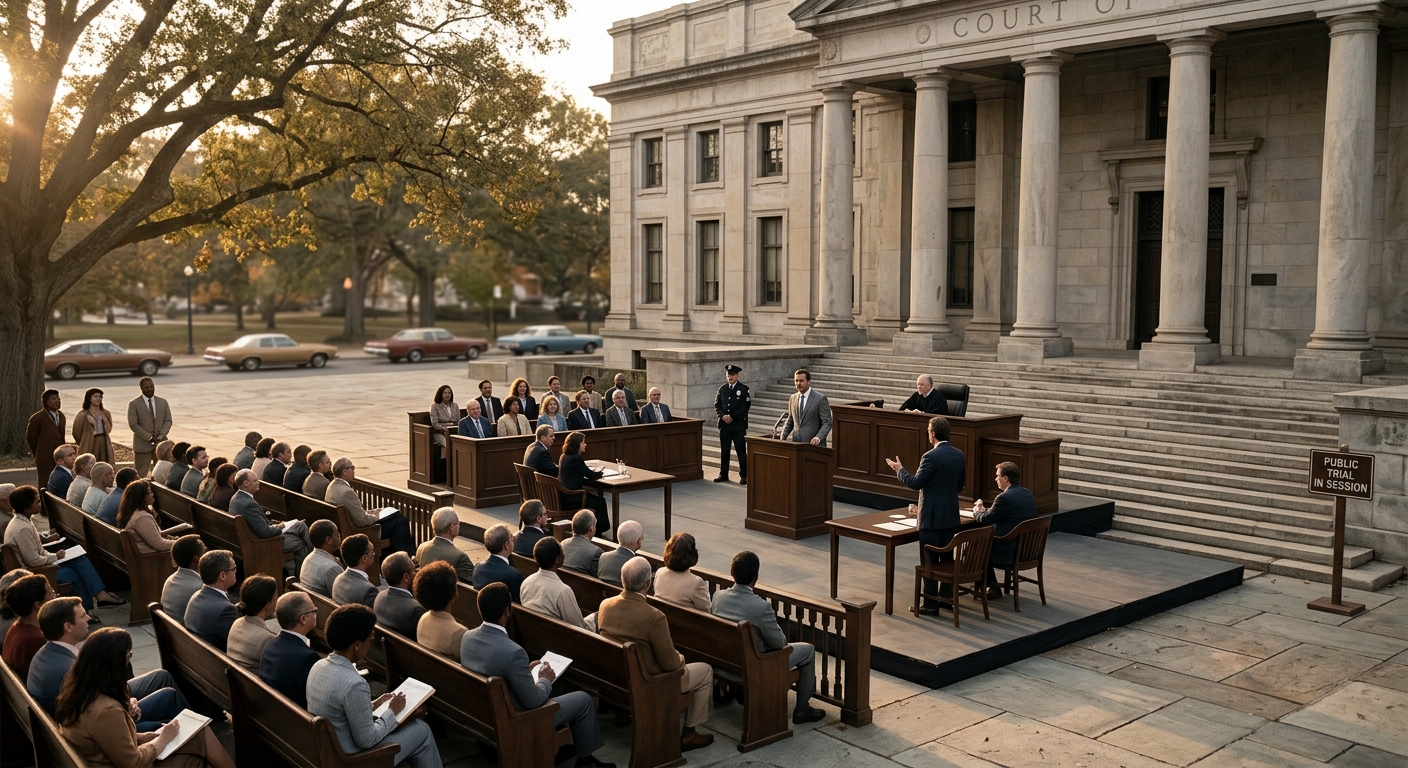
Punjab has responded with Section 21AAA, introduced through the Anti-Terrorism (Punjab Amendment) Act of 2026. It sets up a special security arrangement for judges, prosecutors, witnesses and defence lawyers in particularly dangerous cases. The Chief Justice of the Lahore High Court may nominate a special judge from among Anti-Terrorism Court judges, and the Prosecutor General of Punjab proposes a panel of five prosecutors, from which one is chosen.
Identities can be shielded through coded references, sealed records, secure locations, video hearings, screens and voice-changing technology. Such systems are often called "faceless courts". The term sounds troubling, but the aim is not to remove judicial process. It is to let trials go ahead without exposing participants to assassination or intimidation.
Other democracies have used similar tools:
Colombia hid the identities of judges during its fight against drug cartels and armed groups.
Italy built special protections for people cooperating with justice against the Mafia.
The United Kingdom allows witness anonymity orders, using pseudonyms, screens and voice modification.
France, Spain, the Netherlands and Chile also protect threatened witnesses and informants, and the Netherlands used protected witness procedures in the MH17 trial over the downing of a passenger aircraft.
7. What This Means
Pakistan has, belatedly, begun to close the gap between modern terrorism and old criminal procedure. The delay carried a deadly cost: thousands of suspects were acquitted, and some returned to kill again.
The new laws can work only if two conditions are met together. Investigators and courts must be given the tools and protection to convict the guilty, and every detention must remain visible, recorded and open to judicial review. Security without legality breeds disappearances and public distrust; legality without security leaves judges and witnesses exposed. A counter-terrorism strategy succeeds only when the courtroom becomes as strong as the battlefield.
Exam Essentials
1. Key Facts and Figures
About 83,000 lives lost and over Rs35 trillion in economic losses from terrorism, 2001 to 2022 (NACTA)
January 2020 to June 2023: 5,696 suspects sent for trial; 671 convicted; 776 acquitted; the rest pending
Anti-Terrorism Act, 1997: basic legal framework for terrorism offences
Section 11EEEE: preventive detention for inquiry for up to 90 days
Anti-Terrorism (Balochistan Amendment) Act, 2025; Anti-Terrorism (Punjab Amendment) Act, 2026 introducing Section 21AAA
September 2026 (Balochistan): about 90 detained, 5 released, 40 referred for trial
Justice Muhammad Noor Meskanzai killed in Kharan, 2022; Judge Abdul Hakim Kakar killed in Mastung, July 2026
6 July 2026, Ziarat: 27 policemen killed
2. Key Terms
Admissible evidence: evidence a court is legally allowed to consider
Preventive detention: holding a suspect to prevent a threat or complete an inquiry before formal charges
Enforced disappearance: detention by the state followed by refusal to acknowledge it
Judicial review: a court's power to examine the legality of state action
Joint investigation team (JIT): a combined team of police and intelligence officials
Challan: the formal police report submitted to a court to start a trial
Faceless courts: trials in which the identities of judges, prosecutors or witnesses are hidden for protection
Witness anonymity order: a legal order concealing a witness's identity
3. Related Subjects
Criminology: criminal justice system, prosecution, witness protection
Internal Security: counter-terrorism policy, militant groups
Constitutional Law: fundamental rights, due process, preventive detention
Governance: police reform, institutional capacity
Human Rights: enforced disappearances, rule of law
4. Useful Arguments
Arrests without convictions turn counter-terrorism into a revolving door.
Intelligence identifies suspects; only admissible evidence convicts them.
Weak prosecution creates pressure for extra-legal shortcuts.
Detention with registration, family notice and judicial review protects both security and rights.
Protecting judges and witnesses is a precondition for justice in terrorism cases.
Comparative experience shows identity protection can be lawful in exceptional threats.
5. Probable Questions
Why does Pakistan's criminal justice system struggle to convict terrorism suspects? Suggest reforms.
"National security and human rights are complementary, not competing, goals." Discuss with reference to preventive detention and enforced disappearances.
Critically examine the case for faceless courts and witness anonymity in terrorism trials.
6. One Quotable Line
"A terrorist caught but not convicted is a threat postponed, not a threat removed."
Comments (0)
No comments yet. Be the first to comment!